
In recent weeks, Vedanta Limited has remained at the centre of public discussion post allegations made by US-based short-seller Viceroy Research. Though such reports often grab public attention but an important legal development brings clarity, something which helped Vedanta continue its operations without being targeted further by Viceroy.
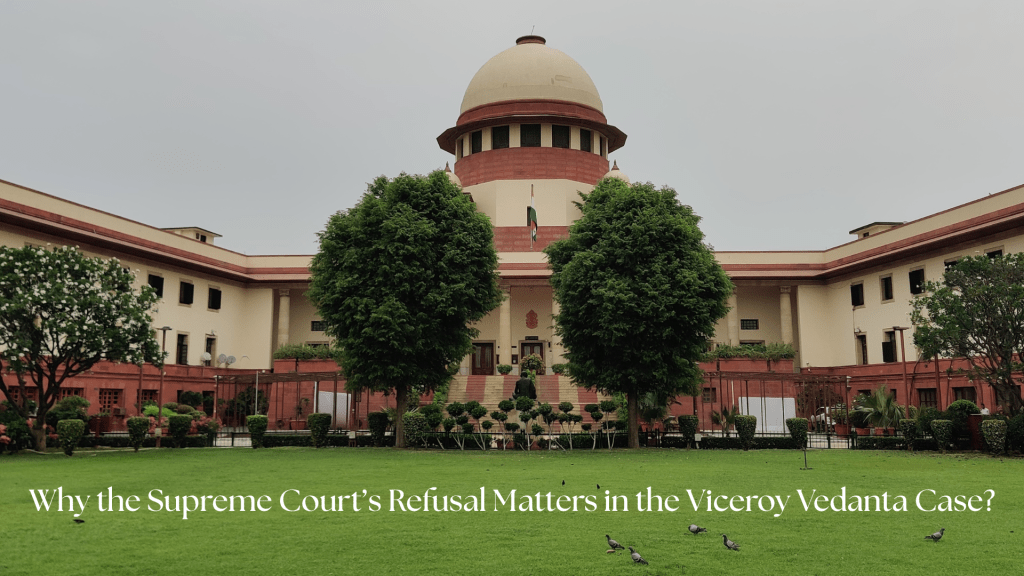
The Supreme Court of India recently refused to hear a petition seeking a probe into the Vedanta Group based on the allegations made by the Viceroy report. This decision by the court highlights how broader implications for how corporate allegations are assessed in the country.
Understanding the Context Behind the Petition
The controversy talks about the report released by Viceroy Research, which raised questions regarding certain financial structures and governance practices within the Vedanta Group. Such activities are quite common among short-seller companies, as they are purposefully done to spark debate across financial markets, media platforms, and investor circles.
In the Vedanta Supreme Court matter, a petition was filed before the Supreme Court seeking judicial intervention and an investigation into the allegations cited in the report. The petitioner argued that the claims warranted the court’s attention in the interest of public accountability and investor protection.
However, when the matter was presented in front of the Supreme Court, it clearly announced its intentions not to intervene and declined this baseless claim. After the court’s decision, the petitioner also withdrew the petition.
What the Supreme Court’s Decision Signals
It is crucial to know that denial on the part of the Supreme Court clearly indicates how the judiciary has always been in the court of jurisdiction and process. The Indian courts highlight that corporate governance, financial disclosure and market conduct related issues are mostly considered by the statutory regulators and not by direct court action through public interest litigation. The agencies like the Securities and Exchange Board of India (SEBI) and the Ministry of Corporate Affairs (MCA) have experience, investigation tools, and legal power to investigate such matters.
The Supreme Court declining the petition indicates that the court should not be involved in resolving such kind of market disputes, particularly where regulatory bodies are in place.
What Does the Decision Highlight?
Short-seller reports represent one viewpoint in the market ecosystem. Though they aimed at tarnishing the company’s image but they cannot automatically change the market landscape. The regulatory bodies are best positioned to evaluate such reports on various parameters and, based on the same, make a final verdict.
This transparency not only creates a free market analysis but also prevents other short seller companies from creating panic.
How Vedanta Responded?
Vedanta has maintained complete transparency in this matter. It has followed all the guidelines and rules & and regulations, making it easier to conclude in this matter. The company has publicly rejected allegations of wrongdoing and emphasised its compliance with regulatory requirements.
Large, diversified conglomerates operating in global markets often face intense scrutiny from analysts, investors, and research firms. Differing interpretations of financial structures are part of this landscape. The appropriate way to address these interpretations, however, is through transparent disclosures and regulatory engagement, not through premature judicial action.
What This Means for Investors and Markets
For investors, the Vedanta Supreme Court decision brings a ray of hope. Also, it signifies how the Indian legal system is well-positioned to handle these matters. It signals that allegations, no matter how widely discussed, will be cross-verified based on the facts. They also need to complete all the regulatory filters before roping any pioneer company like Vedanta into legal proceedings.
SEBI and other authorities have the mandate to seek explanations, conduct investigations, and take action if violations are found. This structured approach protects market stability while ensuring accountability.
At the same time, the judiciary’s stance reassures markets that courts will intervene only when necessary, avoiding unnecessary legal uncertainty triggered by market speculation or incomplete information.
Conclusion
Vedanta Supreme Court matter is important as it not just settles the claims, but it gives a clear on how India can handle these matters. Issues related to corporate conduct and financial structures are thoroughly examined by the regulators, and not directly pushed into the courtroom.
By directing such matters back to regulatory frameworks, the Vedanta Supreme Court has reaffirmed the significance of due process, expertise-led investigation, and institutional balance. For Vedanta, investors, and the broader market, the decision brings a measure of clarity and stability amid ongoing discussions.
As incidents of short seller reports continue to grow, targeting large corporations, the Vedanta case serves as a reminder that the final decision must be made based on the formal reviews and evidence, rather than headlines or market reactions.
 Vedanta Cases
Leave a comment